
I provide practical Sustainable Development Goals support for businesses that want to understand their impact, establish meaningful priorities and turn sustainability ambitions into measurable action. Working from Haarlem, I take a flexible, hands-on approach that may particularly suit local businesses in North Holland. However, I can also support organisations throughout the Netherlands and, where appropriate, elsewhere in Europe.
This work forms part of my wider business consultancy services, where sustainability, governance, projects, processes and practical implementation can overlap. As a B Corp Consultant, I also help businesses improve their social, environmental and governance performance and prepare for B Corp Certification. Consequently, SDG alignment can either complement your B Corp journey or remain equally useful as a standalone approach..
Practical Sustainable Development Goals Support
I can work with your business to assess its current position, identify where improvement matters most and then help develop and implement the actions needed to make progress.
- Baseline, gap and impact assessments
- Policy, governance and implementation support
- Sustainability strategy development
- Targets, KPIs and monitoring
- Energy and climate action
- Stakeholder engagement
- Training and capacity building
Importantly, support does not need to stop with assessment or recommendations. Instead, I can help develop policies and procedures, strengthen governance, improve operational processes and establish practical measurement and monitoring. Moreover, we can phase projects around your priorities and available resources, so you can choose strategic support, hands-on implementation or a combination of both.
This reflects the broader Matsuda Mulville approach: sustainable ambition should lead to practical action and measurable impact.
What Are the Sustainable Development Goals?
The Sustainable Development Goals (SDGs) are 17 interconnected global goals at the heart of the United Nations 2030 Agenda for Sustainable Development. All UN Member States adopted the Goals in 2015 as a common framework for advancing social, economic and environmental sustainability.
Together, the Goals contain 169 more specific targets. Therefore, the SDGs go considerably beyond 17 broad themes. They provide a detailed framework covering issues such as poverty, health, equality, sustainable economic development, responsible consumption, climate action, biodiversity and effective institutions.
The 17 Sustainable Development Goals
No Poverty: addressing poverty in all its forms.
Zero Hunger: improving food security, nutrition and sustainable agriculture.
Good Health and Well-being: supporting healthier lives and well-being.
Quality Education: improving equitable education and lifelong learning.

Gender Equality: advancing equality and women’s and girls’ empowerment.
Clean Water and Sanitation: improving sustainable access to water and sanitation.
Affordable and Clean Energy: expanding access to reliable and sustainable energy.
Decent Work and Economic Growth: supporting decent work and sustainable economic development.
Industry, Innovation and Infrastructure: strengthening resilient infrastructure, sustainable industry and innovation.
Reduced Inequalities: reducing inequality within and between countries.
Sustainable Cities and Communities: creating safer, more inclusive and resilient communities.
Responsible Consumption and Production: improving how resources are produced, used and consumed.

Climate Action: addressing climate change and its impacts.
Life Below Water: protecting oceans, seas and marine resources.
Life on Land: protecting ecosystems, land, forests and biodiversity.
Peace, Justice and Strong Institutions: supporting justice, accountability and effective institutions.

Partnerships for the Goals: strengthening cooperation needed to advance sustainable development.
Because the Goals interconnect, businesses do not necessarily need to address all 17 equally. Instead, a useful starting point is to identify the Goals and underlying targets most relevant to the organisation’s activities, impacts, stakeholders and opportunities for positive contribution.
What Is SDG Alignment?
SDG alignment means identifying which Sustainable Development Goals and underlying targets matter most to your business and then integrating those priorities into strategy, decisions, targets and practical action.
Consequently, meaningful alignment should go beyond displaying SDG logos or expressing general support for sustainable development. Instead, it should consider where the business creates positive or negative impact, where improvement is realistic and where the organisation can direct its resources most effectively.
Depending on the organisation, this may involve environmental impact, resource efficiency, waste, responsible consumption, climate action, resilience, social sustainability, economic development, governance, stakeholder engagement, measurement and monitoring.
SDG Action Manager: From Assessment to Action
B Lab and the UN Global Compact developed the SDG Action Manager as a self-assessment and impact-management tool. It helps businesses understand their current position, identify relevant Sustainable Development Goals and determine where further improvement may be needed.
The tool can help establish a baseline, assess practices and business models, identify priorities and support the development of targets and actions. Furthermore, businesses do not need to work equally on every SDG. Instead, the process helps them focus on the Goals most relevant to their circumstances and potential impact.
Using the SDG Action Manager, I can help your organisation explore and prioritise the Sustainable Development Goals, strengthen its sustainability approach and turn SDG alignment into practical action.
Importantly, businesses do not need to seek B Corp Certification to use the SDG Action Manager. Therefore, organisations can also use it independently as a structured way to improve sustainability performance and positive impact.
Do the Sustainable Development Goals Provide Certification?
No. Aligning a business with the Sustainable Development Goals or using the SDG Action Manager does not provide certification, independent validation or external assurance.
Instead, the framework primarily supports internal assessment, strategic planning, priority-setting, action and improvement. Therefore, businesses can use the SDGs to strengthen sustainability performance without making a certification claim.
Sustainable Development Goals and B Corp Certification
Although they are separate approaches, SDG alignment and B Corp Certification can complement one another strongly. For example, both may involve assessing impact, strengthening governance, developing policies, implementing improvements, setting targets, engaging stakeholders and monitoring performance.
However, B Lab’s formal Standards and Performance Requirements govern the separate B Corp Certification process. Companies pursuing certification must meet the applicable requirements and complete B Lab’s verification process.
Accordingly, a business can pursue either route independently or use them together.
Through my B Corp Consultant support, I can help businesses prepare for certification while also developing wider sustainability improvements. Alternatively, SDG alignment can remain a standalone programme focused on positive impact rather than certification.
From Japan to Haarlem: Global Insight, Local Action
My international experience includes the UK, the Netherlands and Japan. In particular, my professional and personal interest in Japan has given me a close appreciation of how extensively government, business and wider society can integrate the Sustainable Development Goals into everyday thinking and decision-making.
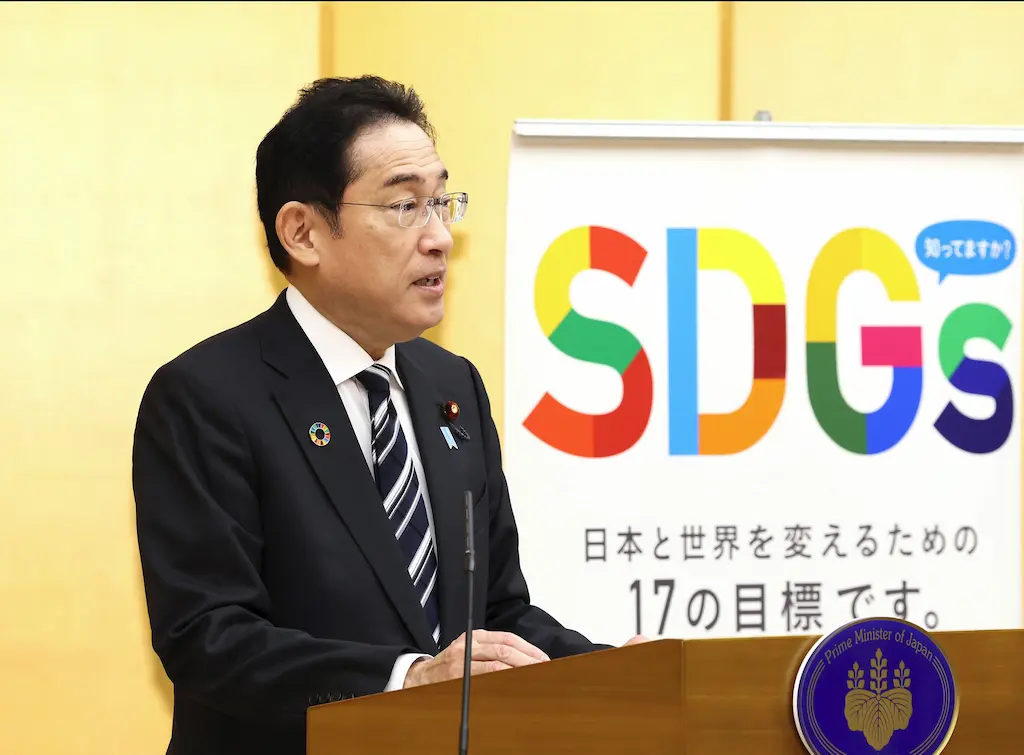
Japan established a Prime Minister-led SDGs Promotion Headquarters and developed an approach that involves government, businesses, civil society and other stakeholders. Consequently, the SDGs have become highly visible in Japanese public and business life.
I would like to see more businesses in Haarlem and North Holland – and across the Netherlands more generally – adopt a similarly practical mindset. Rather than treating the Sustainable Development Goals simply as aspirations, businesses can use them to strengthen awareness, strategic planning, governance and everyday decision-making.
Ultimately, my aim is practical: help businesses understand where they have an impact, identify where they can contribute most and then turn sustainable ambition into positive impact, measurable action and lasting improvement.
If your organisation wants to explore the Sustainable Development Goals, strengthen its sustainability approach or combine SDG work with wider business consultancy support, I can provide flexible assistance from Haarlem for businesses across North Holland, the Netherlands and beyond.
Sustainable Development Goals & Positive Impact FAQs
SDG Priorities and Practical Implementation
How can you help my business create more positive social and environmental impact?
I can help you assess where your business has positive and negative impacts, identify the areas where improvement matters most, and turn those priorities into practical action. Depending on your business, this can include sustainability strategy, policies and governance, operational improvements, stakeholder engagement, targets, KPIs and monitoring. The Sustainable Development Goals can provide a useful framework for structuring that work without requiring you to address every Goal equally.
Which Sustainable Development Goals are most relevant to my business?
That depends on your activities, business model, impacts, stakeholders and opportunities for positive contribution. Rather than selecting Goals because they look relevant at a high level, I can help you identify the SDGs and underlying targets that are most closely connected to your business and use them to set meaningful priorities.
Do I need to work on all 17 SDGs to make meaningful progress?
No. A practical business approach is to focus on the Goals and underlying targets that are most relevant to your organisation and where you can realistically improve or contribute. The SDGs are interconnected, but meaningful alignment is about prioritisation and action rather than trying to give all 17 Goals equal attention.
Can you help me turn my sustainability ambitions into practical actions, targets and KPIs?
Yes. My support can move beyond assessment and recommendations into implementation. I can help develop policies and procedures, strengthen governance and operational processes, define targets and KPIs, and establish practical measurement and monitoring. Work can also be phased around your priorities and available resources.
Assessment, Local Priorities and the SDG Action Manager
How do you assess where my business is already doing well and where I could improve?
A typical starting point can include a baseline, gap and impact assessment. This helps build a clearer picture of your current practices, impacts and opportunities, after which we can prioritise improvements and develop actions that are proportionate to your business. Where useful, the SDG Action Manager can also provide a structured self-assessment approach.
Can your SDG support help me address local or regional priorities such as energy use, waste, circularity and climate action?
Yes, where those issues are relevant to your business. Local and regional sustainability priorities can include areas such as energy efficiency, sustainable use of materials, waste reduction and circularity, while the SDGs provide a wider framework for topics including clean energy, responsible consumption and production, climate action, decent work and sustainable communities. I can help you connect relevant issues to practical business priorities, actions and measurement.
What is the SDG Action Manager, and can you help me use it?
The SDG Action Manager is a self-assessment and impact-management tool developed by B Lab and the United Nations Global Compact. It can help businesses establish a starting point, identify relevant SDGs, understand impact, set goals and track improvement. I can support you in using the tool to explore priorities and translate the results into practical action.
B Corp, Assurance and Where I Work
Do I need to pursue B Corp Certification to work with you on the SDGs?
No. SDG alignment can be used as a standalone approach to improving sustainability performance and positive impact. If you are also pursuing B Corp Certification, the two approaches can complement each other because both can involve impact assessment, governance, policies, targets, stakeholder engagement and continuous improvement.
Does aligning my business with the SDGs provide certification or independent assurance?
No. Aligning your business with the Sustainable Development Goals or using the SDG Action Manager does not itself provide certification, independent validation or external assurance. B Corp Certification is a separate process governed by B Lab’s applicable standards and verification requirements.
Can you support my business locally or regionally, as well as elsewhere in the Netherlands?
Yes. I work from North Holland and my flexible, hands-on approach may particularly suit businesses looking for local or regional support. I can also support organisations elsewhere in the Netherlands and, where appropriate, elsewhere in Europe.
Are the Sustainable Development Goals Still on Track for 2030?
Not overall. Although the world has made progress since UN Member States adopted the Sustainable Development Goals in 2015, the pace remains insufficient to achieve the full 2030 Agenda without substantial acceleration.
The United Nations Sustainable Development Goals Report 2026 shows that only a minority of measurable targets are currently on track. Meanwhile, many are progressing too slowly, stagnating or moving backwards.
Therefore, in 2026 the Sustainable Development Goals remain an active global framework, but governments, businesses and wider society will need to accelerate action substantially if they want to realise the full ambitions of the 2030 Agenda.